Making a global campaign executable for regional teams

Company: Global leader in smart buildings and sustainability (confidential)
Focus: Global campaign strategy, regional adaptation, multi-touch framework
Constraint: High-level global brief, needed to translate into something usable across multiple regions
Global campaigns tend to be well thought through. However, each region operates under different constraints, from legislation and climate to infrastructure and market maturity. What works in one region doesn’t automatically translate to another. If that isn’t built into the global campaign upfront, local teams are left interpreting the strategy and figuring out how to make it work in practice.
Context
The brief was simple: create a campaign plan to support demand for data center solutions across key markets. At a global level, that meant aligning around core themes like sustainability, scalability, and energy efficiency.
But that’s not enough for execution. Each region operates under different constraints, from regulation and infrastructure to market maturity and buying behavior. Without translating that into something concrete, the campaign won't resonate locally.
Approach: Build the full system, not just the idea
I built out the campaign as something teams could actually run, starting with a full campaign structure:
- A multi-phase rollout across awareness, consideration, and intent
- Clear objectives tied to pipeline, engagement, and lead generation
- A defined mix of paid media, content, events, and sales enablement
From there, the focus shifted to execution.
1. Turn strategy into a timeline
The campaign was mapped across a 10-month rollout, including:
- Pre-campaign planning, content creation, and regional alignment
- Awareness phase with thought leadership, paid media, and organic amplification
- Consideration and intent phases with ABM, events, and sales activation
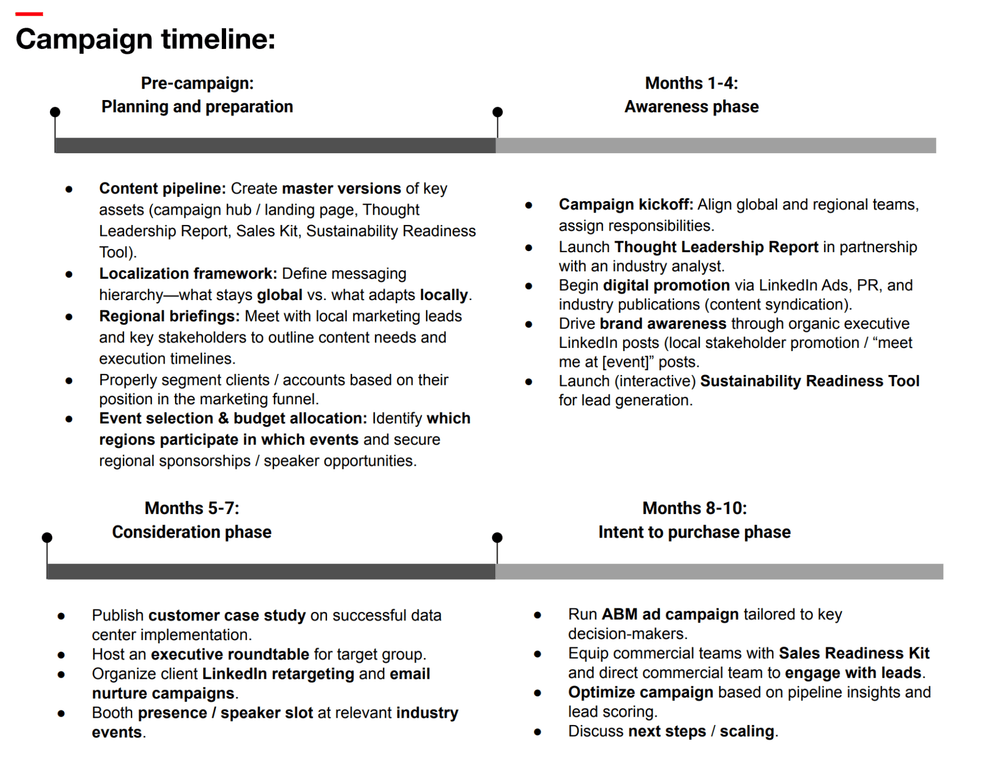
This made it clear not just what to do, but when and how it connects.
2. Define what stays global versus what adapts
A localization framework was built to separate:
- Global themes, like sustainability leadership and AI-driven data centers
- Regional adaptations based on market-specific challenges
For example:
- US focuses on AI demand and regulatory pressure
- India on rapid growth and power reliability
- Saudi Arabia on climate constraints and large-scale infrastructure projects
- Ireland on EU regulations and carbon neutrality targets
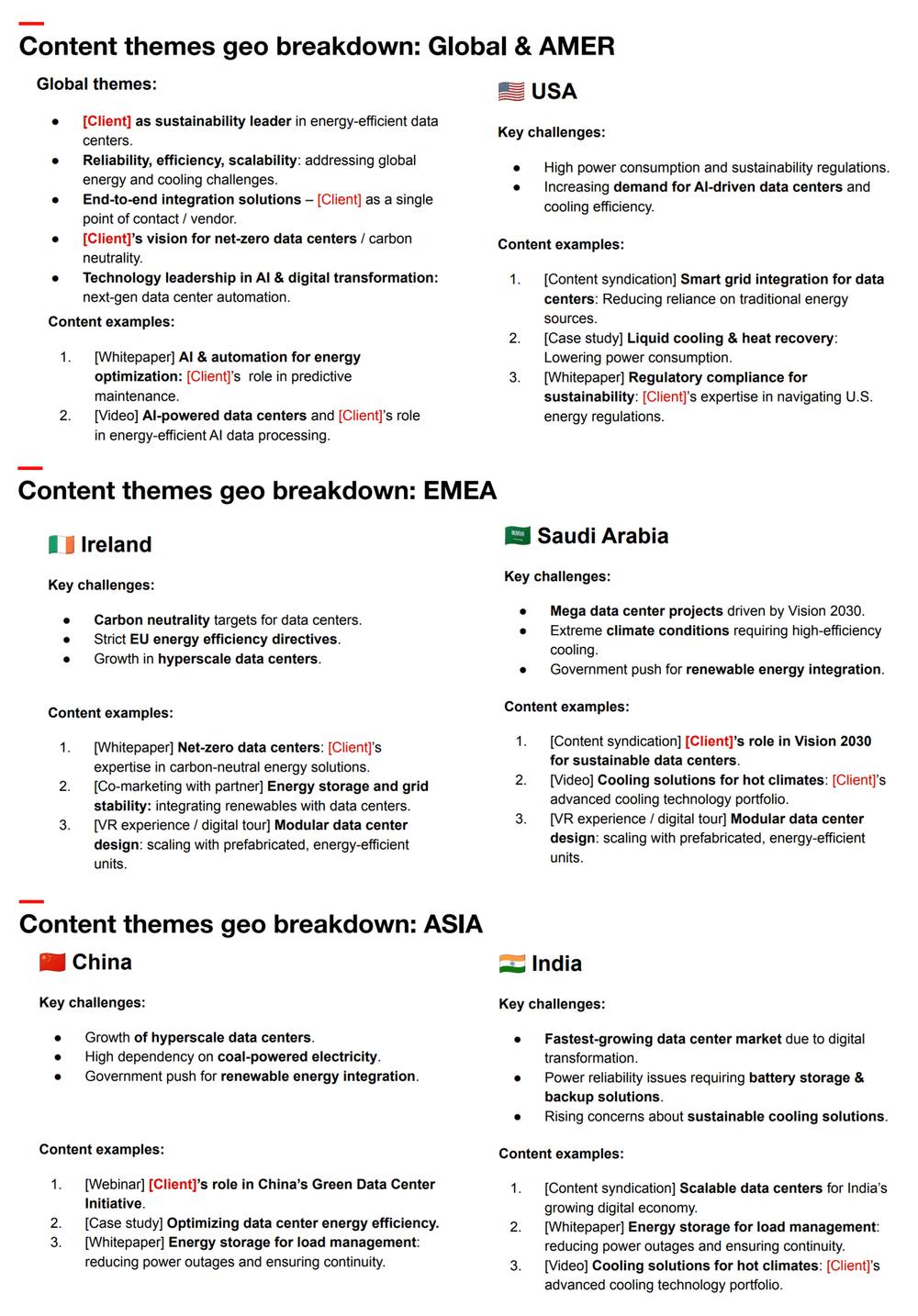
Each region had tailored content ideas, formats, and angles.
3. Give teams something they can actually use
The appendix turned the strategy into execution:
- Region-specific content ideas, from whitepapers to videos and webinars
- Event and tradeshow mapping per market
- Branded content mockups to show how assets could actually look and feel
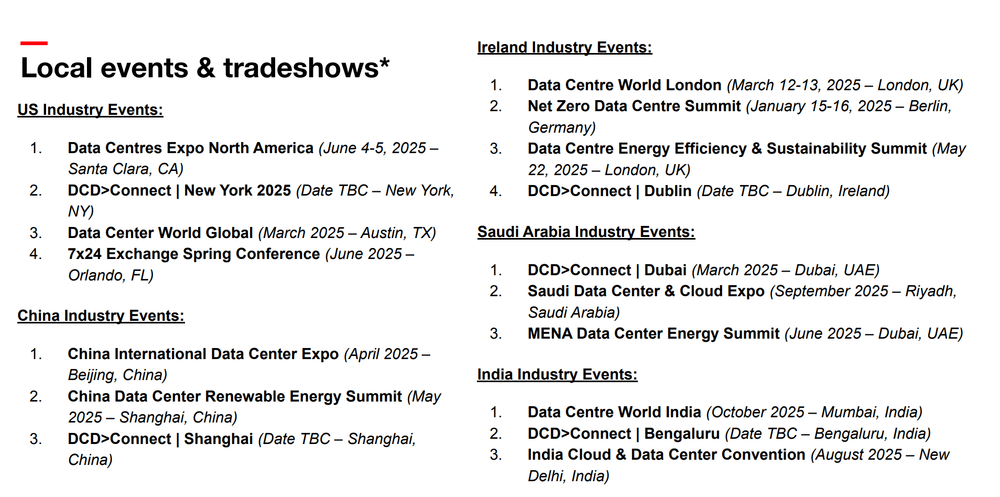
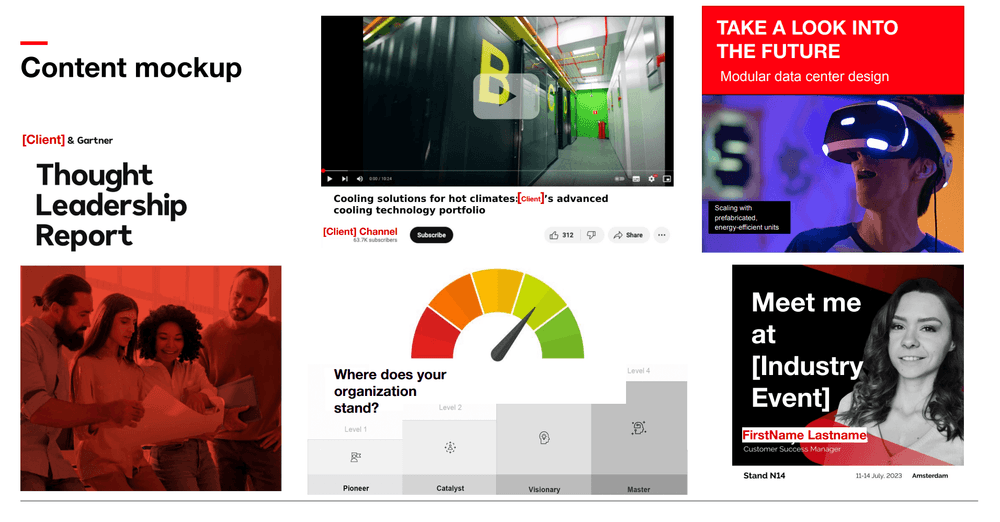
Instead of abstract recommendations, teams had concrete starting points.
The result
Click here to view the campaign plan.
The result was a ready-to-launch campaign plan that went beyond the original brief with a structured system:
- Clear phases and timelines
- Defined channels and tactics
- Localized execution per region
Something global teams could align on, and regional teams could actually run with.
Global strategy only works if it holds up locally. If regional teams have to fill in the gaps themselves, consistency drops and execution slows down. The more you define upfront (timelines, content, localization), the easier it is for teams to actually move.